Man-to-Man or Zone: Two Ways to Defend Space
Man-to-man or zone defense becomes easier to read when you track each defender’s assignment, watch how the ball shifts, and notice who covers open space.
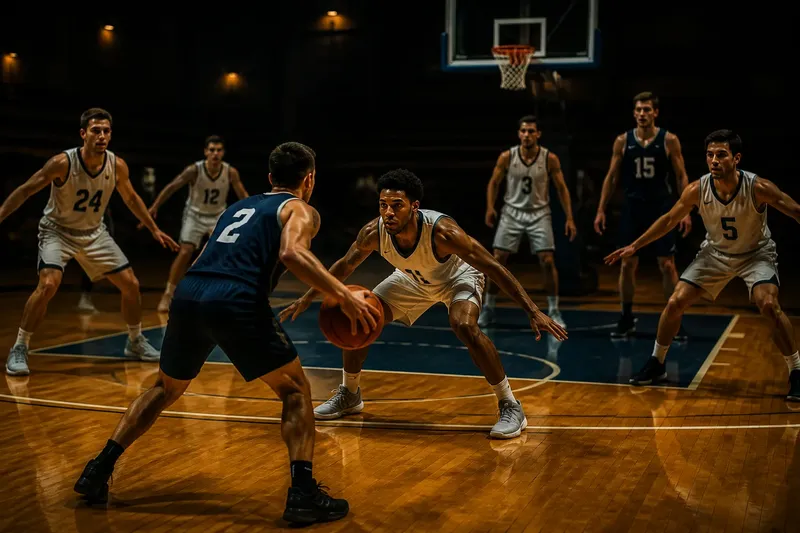
Man-to-man or zone defense: which one are you watching when a defender leaves an opponent to meet the ball? Start by following that defender’s eyes and feet, not the ball alone. The answer is usually visible in the assignment: a player may be responsible for one opponent, or for an area that different opponents enter.
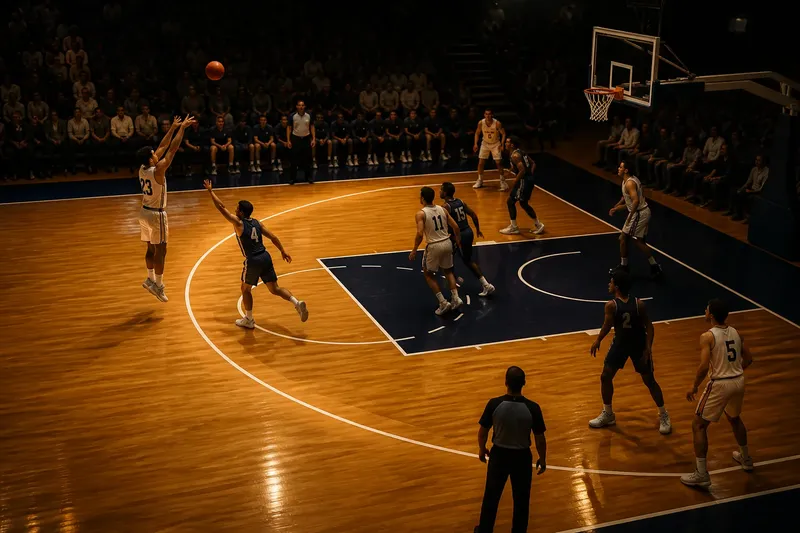
Basketball offers a clear view of both approaches because the court is compact and players move through one another’s paths. The same basic distinction appears in other team sports, though their rules and movement patterns differ. To read a possession, identify the defensive arrangement, follow what it asks players to notice, then see how the team responds when the attack changes the picture.
Begin with the defender’s assignment
In man-to-man defense, each defender takes primary responsibility for guarding an opposing player. “Primary” matters: teammates still help when a dribbler drives or an assignment gets screened, but they have to communicate and recover. A defender’s attention tends to stay connected to a person even as that person moves across the court.
In zone defense, players divide responsibility by area. A defender guards the opponents who enter that area, rather than tracking one person everywhere. As the ball or an attacker moves, the defenders shift together, and responsibility for a particular opponent may pass from one player to another.
Watch one defender for a few seconds. If an opponent cuts across the court and the defender follows, that points toward man-to-man. If the defender stays near a patch of floor and another defender takes over the cutter, that points toward zone. A single glance can mislead; look for the pattern over several movements.
Read the spacing before the ball moves
Before the offense begins its action, notice where the defenders stand in relation to one another. Man-to-man defenders often line up near their individual opponents, though they may leave space to help on a drive. Zone defenders tend to occupy recognizable areas, with teammates positioned close enough to cover neighboring gaps.
In basketball, a familiar zone shape may place players in rows or along the edges of the key. Don’t treat a formation as a label by itself. Teams can disguise their intentions, adjust the shape, or begin in one arrangement and change after the ball moves. Instead, ask whether the defenders are matching people’s routes or maintaining coverage around parts of the floor.
Also check the gaps between defenders. A zone’s open spaces can sit between players or near its edges, while man-to-man spacing changes as individual opponents spread out. Neither arrangement means every patch of floor is permanently open or closed; movement changes the coverage.
Practical cue: identify the nearest defender to the ball, then check whether that player’s position makes sense as a personal matchup or as part of a shared shape.
Follow the ball and the handoffs in responsibility
As the offense moves the ball, watch the defense’s reaction rather than trying to name the scheme immediately. In man-to-man, defenders generally shift with their assignments. A pass may prompt them to adjust their angle or close toward the receiver, but the original matchup often remains visible.
In a zone, the ball’s path tends to pull several defenders toward the same side. One steps toward the ball, a teammate covers the nearby passing lane, and others slide to protect the middle or opposite side. The unit’s movement can look like a connected shift instead of a collection of separate pursuits.
The crucial clue is what happens when an attacker crosses a boundary between areas. If one defender releases that player and another picks them up, the team may be rotating through zone coverage. If a defender keeps following, the team may be staying with a man-to-man assignment. A switch on a screen can also produce a handoff in man-to-man, so consider the whole sequence rather than treating any one exchange as proof.
Imagine a hypothetical basketball possession: the offense sends a guard from the right wing across the top, while a forward cuts toward the basket. In one possible zone, the guard changes hands between defenders near the top, and a low defender steps toward the forward as the cut enters the key. The observable clue would be several defenders adjusting to the ball and the area at once; it would suggest shared coverage, not establish the scheme from that moment alone.
Notice what the defense is asking players to see
Man-to-man asks defenders to keep track of an opponent’s location, speed, and likely next move. They must also notice when helping is necessary and when to return to their assignment. A defender who watches only the ball can lose a cutter behind them; one who watches only their matchup may miss a teammate in trouble.
Zone asks defenders to read the ball, nearby attackers, and the spaces between teammates. They need to recognize when an area is becoming overloaded and when a receiver is entering a seam. Because one defender may be guarding a space rather than shadowing a person, the team’s communication and coordinated shifts matter.
For a viewer, that difference changes what to track. With man-to-man, pick one matchup and see whether the defender stays connected through a screen or cut. With zone, pick one gap and see whether the defense closes it, hands an attacker across, or leaves it available. Either way, you are looking for responsibility in motion.
Compare the trade-offs without calling one better
Man-to-man can make individual matchups easier to see, and defenders can apply pressure to a particular ball handler. But screens and quick cuts can disrupt those matchups. Teammates may need to switch, fight around a screen, or help and then recover; each choice can create a moment of uncertainty.
Zone can protect crowded areas and let defenders share coverage, which may complicate direct routes toward the basket. Yet an offense that moves the ball quickly can shift the zone before its players settle. A receiver may find space at the edge, in the middle, or behind a defender who has stepped toward the ball.
These are tendencies, not promises. A team’s personnel, communication, opponent, and game situation all shape what a defensive choice can accomplish. One approach does not automatically require more effort or skill; each asks players to solve a different attention problem.
What should you watch to identify the defense?
Does a defender follow an opponent across the court?
Following a player for an extended route points toward man-to-man, especially if the defender remains responsible after the ball changes sides. Check whether the pattern continues when other attackers move nearby.
What does it mean when defenders shift toward the ball?
A coordinated slide by several defenders can indicate zone coverage, because they are protecting connected areas around the ball. Man-to-man defenders can also help and rotate, so look for whether they return to individual matchups afterward.
Can a team change its defensive approach during a possession?
Yes. A defense may switch assignments around a screen, trap the ball, or alter its coverage as the play develops. Read the next movement rather than assuming the opening alignment describes every moment.
Does an open player prove the defense made a mistake?
Not by itself. A defender may have deliberately left one opponent to help against a drive, while a teammate rotates to cover the open player. Watch whether the defense recovers and whether the offense can use the opening before it closes.
Use a short viewing routine during a game
When the next defensive possession starts, work through a simple sequence. Give the defense time to reveal its pattern; do not force a verdict from the opening stance.
- Choose one defender. Note whether the player is close to a particular opponent or positioned to cover an area.
- Track the first cut. See whether the defender follows the cutter or lets another teammate take responsibility.
- Watch a pass across the court. Look for individual matchups moving with their players or a connected defensive shift toward the ball.
- Check the next screen. Notice whether defenders stay with their assignments, exchange opponents, or respond as part of a broader rotation.
- Look for the recovery. After help or a handoff, see whether defenders fill the space left behind and who ends up responsible for the ball.
- Make a cautious call. Describe the visible pattern as man-to-man, zone, or a changing coverage if the evidence shifts during the possession.
This routine keeps your attention on what defenders actually do. It also makes mixed or changing coverage easier to describe than a quick guess based on where players stood at the start.
Use the distinction beyond basketball
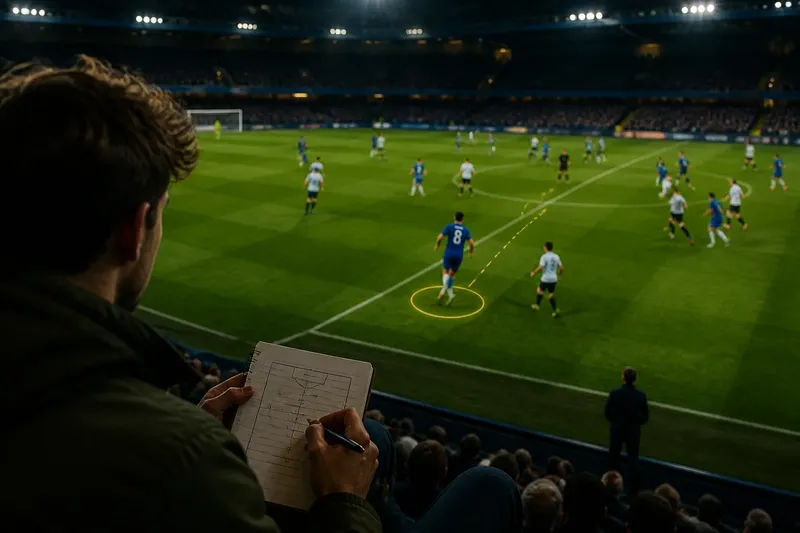
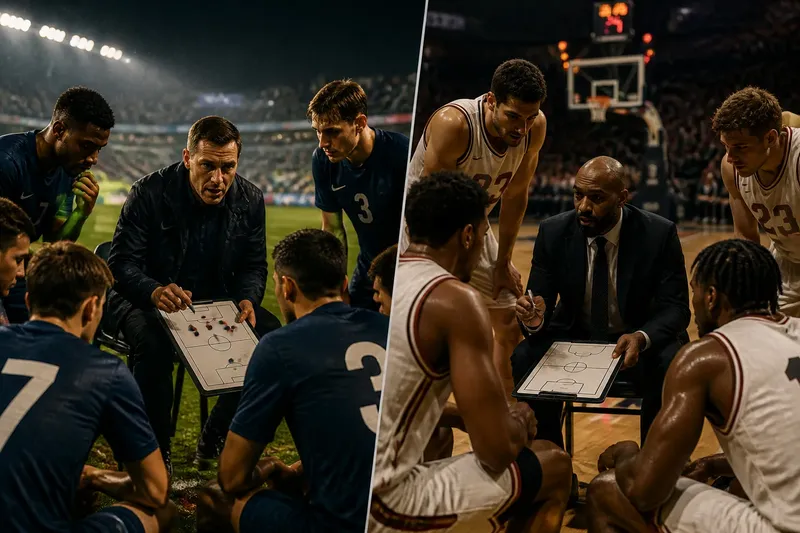
The same question—are defenders tracking opponents or protecting areas?—can help you read other sports. In soccer, for instance, a player might follow an opponent into a different part of the field, or hold position as teammates cover nearby space. In football, defenders may have individual assignments, zone responsibilities, or a combination.
Do not assume the terms work identically in every sport. Field size, offside rules, the number of players, and the ways an attack advances all change how coverage is organized. Focus on the observable responsibility first, then use the sport’s own vocabulary if you want a more precise label.
Once you can tell whether defenders are moving with people or sharing areas, man-to-man or zone defense becomes less like a formation quiz and more like a live reading of choices. The most useful next question is simple: when the attack moves, who notices the new danger, and who takes responsibility for it?