A First Football Match: Follow One Midfielder
Follow one midfielder through a first football match and see how their position shifts between attack and defense without chasing every pass.
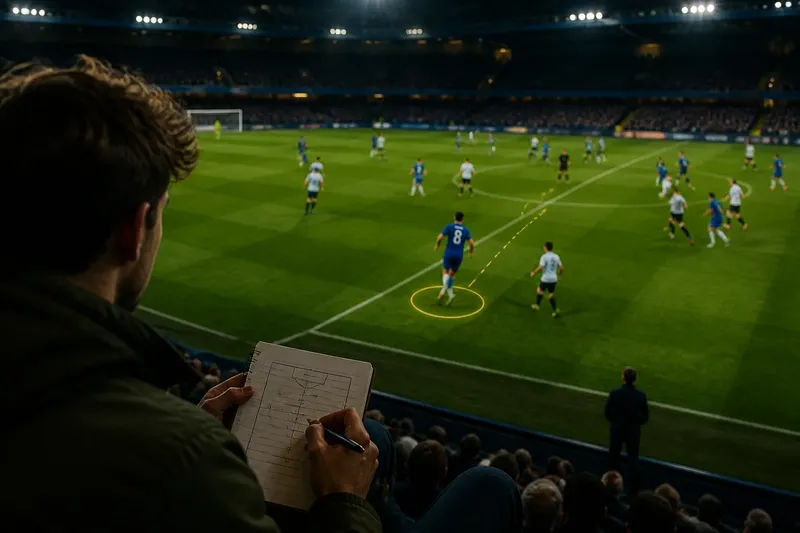
Where should you look during a first football match when the ball moves faster than you can follow? A first football match becomes easier to read when you track one midfielder and notice how their position changes as possession shifts.
This is a viewing exercise, not a test of your football knowledge. Choose one midfielder and ask what they are helping their team do right now: offer a passing option, close space, recover toward goal, or arrive near the penalty area.
Choose a midfielder you can recognize
Before kickoff, look for a player in the middle band of the formation rather than the goalkeeper, a center back, or a striker. A central midfielder is often a useful choice because they work on both sides of the ball. A wide midfielder may be easier to spot if they stay near the touchline.
Use a shirt number, hairstyle, boots, or distinctive movement to recognize the player. If the broadcast shows a lineup, it can help you identify their position, but you do not need to know the formation. Formations describe a starting arrangement; players move away from it as play develops.
If you lose track of your player, find the ball first, then look toward the nearby group of players. Resume following the midfielder when they become visible.
Use a simple routine to follow the midfielder
Keep this short checklist in mind during a phase of play. Each item gives you something to observe and a decision for what to do next.
- Check whether your midfielder is visible. If yes, follow their next movement; if not, find the ball and resume when the player returns to view.
- Notice whether their team has the ball. If yes, watch for a passing option or support position; if no, watch whether the player closes space or retreats toward goal.
- Look at the player's position relative to the ball. If they are ahead of it, notice whether they offer a forward option; if they stay behind it, watch whether they provide support or cover.
- Watch what happens just before the player receives a pass. If they look around or shift into a lane, follow their next touch; if they do not receive it, note where they move to offer another option.
- After the player passes, check whether they move again. If they do, follow the new position; if they hold their place, notice which space or route remains covered.
- When possession changes, check the player's first response. If they move toward the ball, watch the nearby opponent; if they drop back, watch the space between the ball and their goal.
Use only the items you can see. You do not need to judge whether the player made the best choice.
Adapt your view without tracking everyone
If a broadcast camera stays tight on the ball, follow your midfielder only when they enter the frame. Watch what they do just before receiving the ball and just after releasing it: they may check over a shoulder, make space for a teammate, or move to create another option. When the camera cuts elsewhere, let the player go instead of guessing where they are.
With a wide view of the pitch, you can keep your attention on the midfielder while the ball is elsewhere. Notice whether they move into an open lane, hold behind the ball, or drift toward a teammate. If the scene becomes crowded, return to the player's next clear action.
From the stands, choose a midfielder on the side of the field nearest your seat. Use the halfway line and the edges of the penalty area as reference points. Stadium sightlines vary, so watch a phase of play and relocate your player after a stoppage or change of direction rather than straining to track them across the whole pitch.
If identifying one player is difficult, choose a central midfielder whose number you can see or follow the midfielder who repeatedly appears near the ball. Treat the choice as temporary. You are following a role, not keeping a perfect record of one person's movements.
Notice what changes when possession changes
Possession means which team has control of the ball. While your midfielder's team has it, watch the player's position in relation to the ball and the direction of attack. They may come short to receive, move into space ahead, stay behind the play as support, or shift sideways to open a passing lane.
When the opposing team takes possession, the midfielder's priorities can change quickly. They may turn and retreat, close down an opponent, cover a passing route, or stay between the ball and their own goal. Not every midfielder chases the ball directly.
Some changes are obvious, such as an interception. Others happen during a loose challenge, when neither team has settled control. Watch whether your player moves toward the ball, protects space behind it, or waits for a teammate to win the next touch. You do not need to decide which response is correct to notice the change in the situation.
Say you are watching a midfielder near the halfway line while their team attacks down the right. The player slides toward that side but stays behind the ball. An opponent then wins possession, and the midfielder turns toward their own goal. The observable pattern is a shift from supporting the attack to protecting space; the reason for the exact movement may remain unclear.
Read movement without guessing the coach's plan
Movement gives clues, not certain answers. A midfielder who moves closer to a teammate might be offering a short pass, making room for someone else, or preparing to help defend if the ball is lost. Watch what happens next before deciding what the movement may have been for.
It helps to separate position from action. Position is where the player is in relation to the ball, teammates, opponents, and goal. Action is what they do from there: pass, turn, challenge, point, or hold their ground. A player standing still may still occupy a useful space or block a route.
What should you look for as the match unfolds?
What does a midfielder do when their team has the ball?
They may offer a pass, carry the ball forward, support a teammate, or occupy space that draws an opponent away. Watch their position before the ball arrives and their action after it leaves.
Why does a midfielder move back after possession is lost?
Moving back can help the player get between the ball and their own goal or reconnect with teammates. Some midfielders press near the ball instead, so notice where possession was lost and how the player responds.
What is the difference between a central and wide midfielder?
A central midfielder usually works through the middle lanes, while a wide midfielder often starts closer to a touchline. Either can move into other areas, and their responsibilities depend on the team's arrangement and the play.
Can I follow a midfielder if I do not know the formation?
Yes. Identify the player by number or appearance, then watch their position relative to the ball, teammates, opponents, and goal. You can notice a movement without naming the formation behind it.
Keep the exercise small enough to enjoy
Trying to follow every pass, judge every decision, and learn every rule at once can make a match feel like a blur. Give yourself one task: notice where your midfielder is when their team has the ball and what changes when the opponent gets it. Enjoy an interesting pass or tackle without turning the moment into homework.
You can change your focus during a natural break, such as halftime. If your player is difficult to see, choose another midfielder for the next stretch. If you are watching with someone who knows the game, ask what they noticed about your player's position rather than asking them to explain every action in real time.
For a first football match, following one midfielder is enough to reveal a recurring pattern: whom they support in attack, which spaces they protect, and how their role shifts when the ball changes hands. On your next viewing, you can keep that pattern in mind and add another player only if you want to.